
AMD Ryzen 7 9800X3D Review: The Ultimate Gaming Processor?
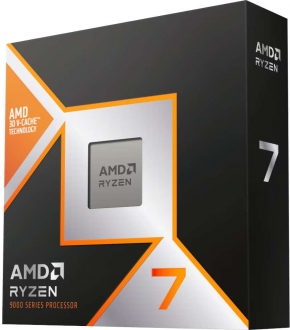
The AMD Ryzen 7 9800X3D is an outstanding choice for gamers and power users seeking top-tier performance on the AM5 platform.
Decision: buy · Match: 79/100 · Confidence: 95/100
How this score is calculated: This score combines two things: the product's absolute hardware level (Qor AI Tech Score 73/100) and how well it fits your quiz answers — weighted 60/40. Product segment: Mid segment. A device that is excellent for its own class still will not reach the score of a higher tier.
This processor delivers exceptional raw performance, especially in gaming, thanks to its Zen 5 architecture and 3D V-Cache technology. While it requires a robust cooling solution and has a higher idle power draw, its future-proof AM5 platform and overclocking capabilities make it a compelling option. Buyers prioritizing gaming frame rates and long-term platform viability will find this CPU an excellent investment. However, potential early failure risks and the need for a high-quality cooler should be considered before purchase.
Detailed analysis
The AMD Ryzen 7 9800X3D is a formidable desktop processor built on the Zen 5 architecture, featuring 8 cores and 16 threads. It was officially announced on October 31, 2024, and released on November 7, 2024. This CPU is designed for the AM5 (LGA 1718) socket, supporting DDR5-5600 memory and PCIe 5.0, positioning it as a future-proof option for high-performance systems. Performance-wise, the 9800X3D shines brightly, especially in gaming, thanks to its 2nd Gen AMD 3D V-Cache technology. This innovation, combined with a 4.7 GHz base clock and up to 5.2 GHz boost frequency, delivers superior frame rates and reduced latency. Its 104 MB of total cache (8 MB L2 + 96 MB L3) significantly enhances its responsiveness in cache-sensitive applications and games. Compatibility is a key strength of the AM5 platform, offering support for the latest DDR5 memory and PCIe 5.0 devices, including high-speed NVMe SSDs. However, the exclusive reliance on DDR5 means users upgrading from older platforms will need to invest in new RAM, which can add to the overall system cost. Longevity is well-addressed by the AM5 socket, which is expected to support future generations of AMD processors, ensuring a long upgrade path. The 4nm manufacturing process also contributes to its efficiency and performance potential for years to come. Potential risks include reports of early failures, particularly with specific motherboard brands, which users should be aware of. While BIOS updates are being released to mitigate these issues, it highlights the importance of careful component selection and staying updated with firmware. For buyers, the AMD Ryzen 7 9800X3D represents a premium choice for a gaming-centric PC build. Its unlocked multiplier also appeals to enthusiasts who wish to fine-tune performance through overclocking, offering greater control than previous X3D models. It is crucial to note that the processor does not include a stock cooler, and its 120W TDP, coupled with the 3D V-Cache, necessitates a robust aftermarket cooling solution. This ensures stable operation and prevents thermal throttling, especially under sustained heavy loads. Despite a higher idle power consumption compared to some competitors, the overall performance and efficiency under load are competitive. This CPU is a strong contender for those building a high-end gaming rig with an eye towards future upgrades and cutting-edge technology.
Strengths
- Exceptional gaming performance due to 2nd Gen 3D V-Cache technology.
- Future-proof AM5 platform with DDR5 and PCIe 5.0 support.
- Unlocked multiplier allows for advanced overclocking capabilities.
- High core and thread count (8 cores, 16 threads) for demanding tasks.
- Efficient 4nm manufacturing process for improved power delivery.
- Integrated AMD Radeon Graphics for basic display output without a dedicated GPU.
Weaknesses
- Does not include a stock cooler, requiring an additional purchase.
- Higher idle power consumption compared to some competing processors.
- Requires DDR5 memory, increasing overall platform upgrade cost.
- Can run hotter than non-X3D Ryzen CPUs, demanding robust cooling.
- Potential for early failures reported with specific motherboard pairings.
- Premium price point compared to standard Ryzen 7 models.
Things that change the decision
Risk of Early Failures
There have been over 100 reported cases of early processor failures, particularly when paired with ASRock and ASUS motherboards. This issue can lead to system instability or complete CPU failure, necessitating careful motherboard selection and BIOS updates.
Feature by feature
| CPU cores | 8 | With 8 cores and 16 threads, the 9800X3D delivers robust performance for demanding games and applications. This core count is optimized for gaming, providing excellent frame rates and responsiveness. |
| Boost Frequency | 5.2 GHz | A boost frequency of 5.2 GHz ensures that the processor can handle burst workloads and provide snappy performance. This is particularly beneficial for games that rely heavily on single-core speed. |
| L3 cache | 96 MB | The massive 96 MB L3 cache, powered by 3D V-Cache technology, is a standout feature for gaming. It significantly reduces memory latency, leading to higher frame rates and smoother gameplay. |
| Memory Type | DDR5 | DDR5 memory support ensures compatibility with the latest memory technology, offering higher bandwidth and improved efficiency. This contributes to the platform's longevity and overall performance. |
| PCIe Version | 5.0 | PCIe 5.0 support provides ample bandwidth for the newest graphics cards and ultra-fast NVMe SSDs. This is crucial for maximizing performance in high-end gaming and content creation systems. |
| TDP | 120 W | A 120W TDP indicates a powerful processor that requires adequate cooling, but it is still manageable for a high-performance gaming CPU. Users should plan for a capable cooling solution. |
| Socket | AM5 (LGA 1718) | The AM5 socket ensures a modern and upgradeable platform, offering compatibility with future AMD processors. This provides a clear upgrade path and extends the system's lifespan. |
| Overclocking | Unlocked Multiplier | With an unlocked multiplier, the Ryzen 7 9800X3D allows enthusiasts to overclock for additional performance. This flexibility is a significant advantage for users looking to push their hardware limits. |
What owners say
Satisfaction: 70/100
Community sentiment for the AMD Ryzen 7 9800X3D is generally positive, with a strong emphasis on its exceptional gaming performance. Many users highlight the significant frame rate improvements and reduced latency provided by the 3D V-Cache technology, making it a top choice for dedicated gamers. The AM5 platform's future-proof nature, including DDR5 and PCIe 5.0 support, is also a frequently praised aspect, seen as a smart long-term investment by early adopters. However, the community is not without its concerns. A recurring negative theme revolves around reports of early processor failures and system instability, particularly when the CPU is paired with specific motherboard brands like ASRock and ASUS. These issues, sometimes involving the CPU not POSTing or showing physical damage, have led to frustration among affected users, though BIOS updates are being released to address these problems. Thermal management is another area of discussion, with users noting that the 3D V-Cache design can lead to higher operating temperatures. While not a critical flaw, it means that a high-quality aftermarket cooler is essential, and some users report increased fan noise even during light usage. The higher idle power consumption of AM5 chips is also mentioned as a minor drawback, though it generally doesn't overshadow the performance benefits. The ability to overclock, a feature absent in some previous X3D models, is well-received by enthusiasts who appreciate the flexibility to push performance further. This capability, combined with the overall raw power, contributes to a strong positive sentiment among those who value maximum performance and customization. Overall, while the AMD Ryzen 7 9800X3D is highly regarded for its gaming prowess and modern platform, potential buyers should be aware of the reported early failure risks and the need for robust cooling. The community's feedback suggests that for the right user, the benefits far outweigh these considerations, provided due diligence is exercised regarding motherboard compatibility and cooling solutions.
Chronic problems
- Thermal Management Challenges common
Due to the 3D V-Cache, the CPU can run hotter, leading to increased fan noise and requiring careful optimization of cooling solutions. This is a common discussion point, especially under sustained loads.
Smart alternatives
- AMD Ryzen 9 7900X3D — The Ryzen 9 7900X3D offers more cores (12 vs 8) and a slightly higher boost frequency, making it better for mixed workloads that benefit from higher core counts. However, for pure gaming, the 9800X3D's optimized 3D V-Cache on fewer cores can sometimes yield similar or better results. It is an older generation X3D chip.
- Intel Core i9-13900 — The Intel Core i9-13900 features significantly more cores (24 vs 8) and a lower TDP, making it highly efficient for productivity and multi-threaded tasks. While it offers competitive gaming performance, the 9800X3D often holds an edge in pure gaming scenarios due to its 3D V-Cache. It also supports both DDR4 and DDR5 memory.
- AMD Ryzen 9 9900X — The Ryzen 9 9900X, also based on Zen 5, offers 12 cores and a higher boost clock, making it superior for multi-threaded applications and general productivity. However, it lacks the 3D V-Cache of the 9800X3D, meaning its gaming performance, while excellent, might not reach the same peak levels in cache-sensitive titles. It is a newer, non-X3D chip.
Price outlook
Trend: stable · Buy or wait: buy · Best time to buy: Now, or during major sales events (e.g., Black Friday, year-end)
Given its relatively recent release and strong market position as a leading gaming CPU, its price has shown a tendency towards stability since its launch, with some minor adjustments. The price trend for the AMD Ryzen 7 9800X3D is expected to remain relatively stable in the short term, with minor fluctuations. This stability is largely driven by its performance leadership in gaming and a consistent demand from enthusiasts and high-end PC builders. AMD's strategic pricing for its X3D lineup typically maintains a premium, reflecting the specialized 3D V-Cache technology. Key drivers influencing this stability include its positioning as a premium gaming CPU and the current competitive landscape. While Intel offers strong alternatives, the 9800X3D often holds an edge in specific gaming benchmarks, allowing it to maintain its price point. Stock levels appear to be consistent across various retailers, preventing significant price spikes due to scarcity. Looking further ahead, the introduction of next-generation AMD CPUs, potentially in late 2027 or early 2028, could lead to more significant price adjustments. As newer architectures and models are released, the 9800X3D may see gradual price reductions, especially if a direct successor with improved 3D V-Cache technology emerges. However, for the next 6-12 months, major drops are unlikely outside of promotional events. For buyers considering this processor, the current market offers a reasonable entry point, especially given its strong performance. While waiting for a substantial price cut might be a long-term strategy, significant savings are more likely to come from seasonal sales events like Black Friday or year-end promotions, rather than a general market depreciation. Therefore, if the need is immediate, purchasing now is a sensible decision; otherwise, monitoring for specific deals is advisable.
Who is it for?
Buy it if: This processor is best for serious gamers and enthusiasts who prioritize top-tier gaming performance and want a future-proof platform (Raw performance: 95, Longevity and support: 85). It also suits users who enjoy overclocking and fine-tuning their system (Feature set: 90).
Skip it if: It is not ideal for budget-conscious buyers or those who do not require extreme gaming performance, as the total cost of ownership including cooling and DDR5 memory can be high (Value for money: 80, Thermals and noise: 65). Users sensitive to idle power consumption might also find it less appealing.
Verdict
The AMD Ryzen 7 9800X3D is a powerhouse for gaming and demanding applications, offering leading performance and a modern, upgradeable platform. While it comes with specific requirements for cooling and memory, its benefits for high-end users are substantial. Despite some reported early issues, ongoing support from manufacturers aims to ensure a stable and high-performing experience.
Frequently asked questions
Is the AMD Ryzen 7 9800X3D good for gaming?
Yes, the AMD Ryzen 7 9800X3D offers best-in-class gaming performance thanks to its 3D V-Cache technology. It's excellent for competitive gamers seeking high frame rates and low latency.
What socket does the Ryzen 7 9800X3D use?
The Ryzen 7 9800X3D uses AMD's next-generation AM5 (LGA 1718) socket. This platform supports DDR5 memory and PCIe 5.0, making it ideal for a future-proof system.
Do I need a cooler for the Ryzen 7 9800X3D?
Yes, the CPU does not include a cooler in the box and requires an effective cooling solution due to its 120W TDP. An additional cooler is recommended for stable operation under high thermal loads.
Does the Ryzen 7 9800X3D have overclocking potential?
Yes, the Ryzen 7 9800X3D has an unlocked multiplier, offering users the flexibility to further boost performance through overclocking. This is a significant plus for enthusiasts.
What are the downsides of the Ryzen 7 9800X3D?
Potential early failure reports, higher idle power consumption, and thermal management challenges due to 3D V-Cache are among its downsides. It also only supports DDR5 memory.