
ASRock RX 9070 XT Steel Legend Dark: Strong Choice for 1440p/4K Gaming
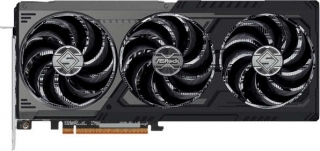
The Asrock Radeon RX 9070 XT Steel Legend Dark offers strong 1440p performance and effective cooling, but potential coil whine and high hotspot temperatures warrant consideration.
Decision: consider · Match: 76/100 · Confidence: 85/100
How this score is calculated: This score combines two things: the product's absolute hardware level (Qor AI Tech Score 75/100) and how well it fits your quiz answers — weighted 60/40. Product segment: Upper-mid segment. A device that is excellent for its own class still will not reach the score of a higher tier.
This graphics card is a solid contender for gamers seeking high refresh rates at 1440p, backed by a robust cooling solution and appealing aesthetics. Its 16GB GDDR6 memory and RDNA 4.0 architecture provide ample power for modern titles and future-proofing. However, potential buyers should be aware of reported coil whine and elevated hotspot temperatures, which, while often within safe limits, can impact the user experience. The card's power requirements also necessitate a capable power supply.
Detailed analysis
The Asrock Radeon RX 9070 XT Steel Legend Dark is a high-performance graphics card built on AMD's RDNA 4.0 architecture, targeting the upper-mid segment of the market. It features 16GB of GDDR6 memory, a 256-bit memory interface, and a boost frequency of up to 2970 MHz, making it well-suited for demanding 1440p and even 4K gaming experiences. Performance-wise, the card boasts 4096 shading units and 64 ray tracing cores, delivering strong frame rates in modern titles. Its support for DirectX 12 Ultimate and AMD FSR 4 upscaling technology further enhances visual quality and performance. The inclusion of AI accelerators also positions it for future advancements in gaming and creative applications. Compatibility is robust, with a PCIe 5.0 interface ensuring high bandwidth with contemporary motherboards. The card provides three DisplayPort 2.1 and one HDMI 2.1 output, accommodating multiple high-resolution, high-refresh-rate monitors. However, its substantial 2.9-slot design and 298mm length mean it requires adequate space within a PC case. For longevity, the RDNA 4.0 architecture and 16GB VRAM are strong assets, providing a solid foundation for upcoming game releases. ASRock's commitment to driver updates and the general support for AMD's ecosystem contribute to the card's long-term viability. The metal backplate also adds to its physical durability. Potential risks include a higher power consumption of 304W, necessitating a robust 800W power supply. Some users have also reported coil whine under heavy loads and elevated hotspot temperatures, although these are often within safe operating parameters. These factors should be weighed against its performance benefits. Buying advice for this card centers on its strong 1440p performance and effective cooling. It's a compelling option for gamers prioritizing high frame rates and visual fidelity in that resolution. Its aesthetic design, including ARGB lighting, also appeals to users building visually coordinated systems. However, those sensitive to noise or with smaller PC cases might need to consider alternatives. The power requirements are also a significant factor, requiring a capable PSU. Overall, it represents a strong offering in its segment, provided these considerations align with the buyer's priorities.
Strengths
- Delivers high refresh rate performance at 1440p, making it ideal for competitive gaming and immersive experiences.
- Features a robust triple-fan Steel Legend cooling solution that effectively maintains low GPU temperatures and operates quietly under load.
- Equipped with 16GB of GDDR6 memory, providing ample VRAM for high-resolution textures and future-proofing against demanding games.
- Boasts a stylish design with a metal backplate and customizable ARGB LED lighting, enhancing the aesthetic appeal of any PC build.
- Supports advanced technologies like AMD FSR 4 upscaling and hardware-accelerated ray tracing for enhanced visual quality and performance.
- Offers good overclocking potential, allowing enthusiasts to extract even more performance with careful tuning.
Weaknesses
- Requires a significant power input (304W TBP, two 8-pin connectors) and a recommended 800W PSU, which can be costly or require an upgrade.
- The card's physical dimensions (298mm length, 2.9-slot design) can pose compatibility challenges for smaller PC cases.
- While generally quiet, some users report noticeable coil whine under high load, which can be a distraction.
- Hotspot temperatures, while within safe limits, can be higher than some competing models, potentially impacting long-term thermal stability.
- The effective memory speed of 20 Gbps, while good, is not the absolute fastest available in this performance tier.
Things that change the decision
High Power Consumption and PSU Requirement
The card has a graphics power of 304W and requires two 8-pin power connectors, with an 800W PSU recommended. This means users must ensure their power supply unit is adequate, potentially incurring an additional upgrade cost or limiting compatibility with older systems.
Case Size Restrictions
With a depth of 298mm and occupying 2.9 slots, this is a substantial card. Buyers need to verify their PC case has sufficient clearance to accommodate its physical dimensions, especially in smaller form factor builds.
Hotspot Temperatures
Certain users have observed higher hotspot temperatures (around 88-92°C) compared to other models, although these are typically within safe operating limits. This could indicate less optimal thermal performance in specific scenarios or require manual fan curve adjustments.
Feature by feature
| GPU Architecture | RDNA 4.0 | The RDNA 4.0 architecture ensures the card leverages the latest advancements for gaming and computational tasks. This provides cutting-edge performance and support for new technologies. |
| Memory Size | 16 GB GDDR6 | 16GB of GDDR6 memory is ample for demanding 1440p and 4K gaming, allowing for high texture settings and multitasking. This capacity helps future-proof the card against increasingly memory-hungry titles. |
| PCIe Interface | 5.0 | The PCIe 5.0 interface provides maximum bandwidth for the GPU, ensuring it isn't bottlenecked by data transfer speeds. This also offers forward compatibility with upcoming motherboard standards. |
| Ray Tracing Cores | 64 birim | With 64 ray tracing cores, the card supports hardware-accelerated ray tracing for more immersive visuals. While AMD's ray tracing performance has improved, it still trails NVIDIA in some titles. |
| Display Outputs | 3x DisplayPort 2.1, 1x HDMI 2.1 | The multiple DisplayPort 2.1 and HDMI 2.1 outputs allow for versatile multi-monitor configurations and support the latest high refresh rate and resolution displays. This ensures broad connectivity options for various setups. |
| Cooling Type | Fan Cooled (3 fans) | The triple-fan cooling solution is designed to efficiently dissipate heat, keeping GPU temperatures low. This typically results in quieter operation compared to dual-fan designs, enhancing user comfort. |
| ARGB LED Lighting | Yes, Polychrome Sync | Integrated ARGB LED lighting with Polychrome Sync compatibility allows users to customize the card's appearance and synchronize it with other system components. This enhances the visual appeal of a build. |
| AI Accelerator | Yes | The inclusion of an AI accelerator supports features like AMD FSR 4 and potentially other AI-driven tasks. This helps improve performance in games and applications that leverage AI technologies. |
What owners say
Satisfaction: 72/100
Community sentiment for the Asrock Radeon RX 9070 XT Steel Legend Dark is generally positive, with a notable appreciation for its raw gaming performance. Many owners highlight its capability to drive high refresh rate monitors at 1440p, often describing it as a significant upgrade from previous generations. The card's triple-fan Steel Legend cooling solution also receives consistent praise for its effectiveness in maintaining low GPU temperatures and its relatively quiet operation, even under heavy load. The aesthetic design, featuring a sleek metal backplate and customizable ARGB lighting, is another strong point, particularly appealing to users who prioritize the visual aspect of their PC builds. This contributes to a positive overall impression, especially for those integrating it into a dark-themed system. However, the community is not without its concerns. A frequently reported issue is coil whine, a high-pitched electronic noise that some users experience under high load. While not present in every unit, it's a common enough complaint to be a significant consideration for potential buyers. This issue is often described as a lottery, with some users finding workarounds like undervolting. Another point of discussion revolves around hotspot temperatures. While the overall GPU temperature remains low, some owners have noted that hotspot readings can be higher (in the 88-92°C range) compared to other RX 9070 XT variants. Although these temperatures are typically within AMD's specified thermal limits, they can lead to concerns about long-term performance and require users to potentially adjust fan curves for optimal thermal management. Despite these issues, the positive feedback on performance and cooling often outweighs the negatives for many users. The card is seen as a strong performer for its price segment, particularly for those who can tolerate or mitigate the reported coil whine and manage hotspot temperatures. The ability to overclock and undervolt further adds to its appeal for enthusiasts looking to fine-tune their experience.
What owners keep praising
- High 1440p Performance
Owners consistently laud the card's ability to deliver exceptional frame rates and smooth gameplay at 1440p resolution, making it a favorite for high-refresh-rate monitors. - Effective and Quiet Cooling
The triple-fan Steel Legend cooler is frequently praised for keeping the GPU cool under load while maintaining a low noise profile, contributing to a pleasant gaming experience. - Overclocking and Undervolting Potential
Many users appreciate the flexibility to fine-tune the card's performance through stable overclocking or improve efficiency and reduce noise with undervolting.
Chronic problems
The ownership search turned up no recurring failure for this model — no defect pattern, bad batch or firmware regression that owners keep reporting.
Smart alternatives
- Gigabyte geforce RTX 5070 ti eagle oc sff screen card (GV-N507TEAGLE OC-16GD) — This Gigabyte alternative features NVIDIA's Blackwell architecture and faster GDDR7 memory, offering potentially superior ray tracing performance and overall efficiency. It also uses a smaller 4nm transistor distance, which could lead to better power efficiency.
- Galax geforce RTX 5070 ti ex gamer 1-Click oc screen card — The Galax RTX 5070 Ti offers a different aesthetic and NVIDIA's Blackwell architecture with GDDR7 memory, providing a strong alternative for users preferring NVIDIA's feature set. Its '1-Click OC' feature simplifies performance boosting.
- Gigabyte geforce RTX 5070 ti windforce oc sff screen card — This Gigabyte Windforce model, while also an RTX 5070 Ti, might come at a slightly lower price point than the Steel Legend Dark, offering a more budget-friendly entry into the high-performance segment. It maintains the GDDR7 memory and 4nm process of its NVIDIA counterparts.
Price outlook
Trend: down · Buy or wait: wait · Best time to buy: Late Q4 2026 or early Q1 2027
The price of the Asrock Radeon RX 9070 XT Steel Legend Dark has shown some volatility since its market introduction in March 2025. While its launch price in Japan was around 133,800 yen (approx. This wide range suggests inconsistent pricing and potential for better deals as the market stabilizes and inventory fluctuates. The absence of a consistent catalog price also makes precise forecasting challenging. The market trend for high-end graphics cards, especially those released in the past year, typically involves an initial period of price stability followed by gradual declines as newer generations emerge or competition intensifies. As the RX 9070 XT was released in March 2025, it is approaching a point in its lifecycle where price adjustments become more likely. Given that the card was released in March 2025, it is still relatively new, but the introduction of newer models from both AMD and NVIDIA could put downward pressure on its price. As manufacturers prepare for new product launches, older generations often see price cuts to clear inventory. Therefore, for buyers not in immediate need, waiting a few months could potentially yield better value. The period around late Q4 2026 or early Q1 2027, coinciding with holiday sales or potential new product announcements, might be the optimal time to purchase, as retailers may offer discounts to stimulate sales.
Who is it for?
Buy it if: This graphics card is best for gamers seeking high-performance 1440p gaming with high refresh rates, especially those who appreciate a visually appealing card with ARGB lighting. It also suits users who are comfortable with potential power supply upgrades and have sufficient case space.
Skip it if: It is not ideal for users with compact PC cases due to its large size or those highly sensitive to coil whine. Budget-conscious buyers or those prioritizing maximum power efficiency might also find its power consumption and potential PSU requirements less appealing.
Verdict
The Asrock Radeon RX 9070 XT Steel Legend Dark offers compelling 1440p performance and a premium aesthetic, backed by effective cooling. While it presents strong value for its target segment, potential buyers should be mindful of its power demands and the possibility of coil whine or higher hotspot temperatures.
Frequently asked questions
Is the ASRock Radeon RX 9070 XT Steel Legend Dark suitable for 1440p gaming?
Yes, with 16 GB GDDR6 memory and RDNA 4.0 architecture, it delivers high frame rates in modern games at 1440p resolution. It ensures a fluid experience on high refresh rate monitors.
How is the cooling performance of this graphics card?
The triple-fan Steel Legend cooling system is successful at keeping the card cool and generally quiet under load. The metal backplate also contributes to its thermal performance.
Does the ASRock RX 9070 XT Steel Legend Dark have coil whine issues?
Some users have reported experiencing coil whine under heavy load. This can be a concern for those seeking a silent system and depends on a luck factor.
What power supply unit (PSU) is required for this card?
The card's 304W graphics card power and 8+8 pin power connectors necessitate at least an 800W power supply. You should consider this detail when upgrading your current system.
What is the design like for the ASRock Radeon RX 9070 XT Steel Legend Dark?
The card features a sleek metal backplate and customizable ARGB LED lighting, offering an aesthetic appeal. Polychrome SYNC compatibility allows for synchronization with other system components.