
Nothing Phone (3) Analysis: Performance and Unique Design Evaluation
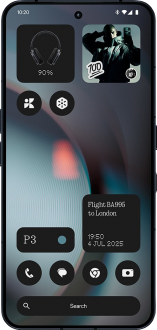
The Nothing Phone (3) offers a distinctive design and fluid software experience, but its camera performance and USB 2.0 limitation warrant careful consideration.
Decision: consider · Match: 77/100 · Confidence: 90/100
How this score is calculated: This score combines two things: the product's absolute hardware level (Qor AI Tech Score 77/100) and how well it fits your quiz answers — weighted 60/40. Product segment: Upper-mid segment. A device that is excellent for its own class still will not reach the score of a higher tier.
This smartphone stands out with its unique Glyph Interface and a clean, fast Nothing OS experience, powered by a capable Snapdragon 8s Gen 4 processor. While it delivers strong everyday performance and extended software support, potential buyers should be aware of its inconsistent camera results, particularly in low light, and the outdated USB Type-C 2.0 port. Its design is a major draw, but the device is also heavier and thicker than some competitors. This makes it a compelling choice for users prioritizing aesthetics and software fluidity over top-tier photography or rapid data transfer.
Detailed analysis
The Nothing Phone (3) enters the smartphone market with a distinctive design and a focus on a clean software experience. It is powered by the Qualcomm Snapdragon 8s Gen 4 chipset, fabricated on a 4 nm process, which promises significant performance gains over its predecessor. The device features a 6.67-inch FHD+ AMOLED display with a 120 Hz adaptive refresh rate, aiming to deliver a fluid visual experience. Performance-wise, the Snapdragon 8s Gen 4 ensures that the Nothing Phone (3) handles daily tasks and demanding applications with ease. Users can expect smooth app transitions and capable gaming performance, although some benchmarks suggest it doesn't quite reach the absolute peak of current flagship processors. The 12 GB of RAM further supports robust multitasking capabilities. The camera system comprises a versatile triple 50 MP setup, including a main sensor, a periscope telephoto with 3x optical zoom, and an ultrawide lens, complemented by a 50 MP front camera. While capable of capturing detailed images with good color accuracy, particularly in macro mode, the system has shown inconsistencies with focus and struggles in low-light environments, which might not satisfy photography enthusiasts. Compatibility is generally strong, with support for 5G, Wi-Fi 7, Bluetooth 6.0, and NFC. It also features dual SIM and eSIM capabilities, offering flexibility for connectivity. However, the inclusion of a USB Type-C 2.0 port is a notable limitation, as it restricts data transfer speeds compared to the faster USB 3.1 standard commonly found in competing devices. Longevity is a key selling point, with Nothing committing to five years of Android updates and seven years of security patches. This extended software support ensures the device remains current and secure for a considerable period, enhancing its value over time. The build quality, featuring a metal frame and Gorilla Glass protection, also contributes to its expected durability. Potential risks include the camera's inconsistent performance, which might disappoint users expecting flagship-level photography. The USB Type-C 2.0 port is another area of concern for those who frequently transfer large files. Additionally, the device's weight and thickness might not appeal to users who prefer a more compact and lighter form factor. For buyers, the Nothing Phone (3) offers a unique blend of style, performance, and long-term software commitment. It's an excellent choice for users who appreciate a minimalist, fluid Android experience and a standout design. However, those prioritizing cutting-edge camera performance or rapid wired data transfer might find better options elsewhere. The device's IP68 rating and robust build add to its appeal for everyday use.
Strengths
- Distinctive transparent design with Glyph Interface offers a unique aesthetic.
- Powerful Qualcomm Snapdragon 8s Gen 4 processor ensures smooth and responsive performance.
- Nothing OS 3.5 provides a clean, fast, and ad-free Android experience with unique widgets.
- Extended software support with five years of Android updates and seven years of security patches.
- Robust build quality featuring a metal frame and Gorilla Glass 7i/Victus protection.
- IP68 water and dust resistance provides enhanced durability against environmental elements.
Weaknesses
- USB Type-C 2.0 port limits data transfer speeds, falling behind modern standards.
- Camera performance can be inconsistent, with focus issues and struggles in low-light conditions.
- The device is heavier (218g) and thicker (9mm) than many direct competitors.
- Lacks an LTPO display panel, which could offer better power efficiency.
- Glass back is prone to fingerprints and smudges, requiring frequent cleaning.
Things that change the decision
Battery Capacity Differences
The Nothing Phone (3) has a 5150 mAh battery in international models, while some regions, like India, receive a larger 5500 mAh capacity. This regional variation means some buyers might get a slightly less enduring device.
Feature by feature
| CPU Chipset | Qualcomm Snapdragon 8s Gen 4 | The Snapdragon 8s Gen 4 provides a significant performance boost, making the phone highly responsive for daily tasks and gaming. It ensures a fluid user experience, though it's not the absolute top-tier flagship processor. |
| RAM | 12 GB | With 12 GB of RAM, the Nothing Phone (3) is well-equipped for heavy multitasking and demanding applications. This ensures a consistently smooth and lag-free experience, even under significant load. |
| Main Camera Resolution | 50 MP | The 50 MP main camera, alongside a telephoto and ultrawide, offers good detail and color accuracy in optimal conditions. However, its performance can be inconsistent, especially with focus and in low light, preventing it from reaching top-tier status. |
| Display Size | 6.67 inches | A 6.67-inch screen offers ample space for content viewing and comfortable interaction. This size is ideal for users who enjoy watching videos, browsing, and gaming on their device. |
| Display Resolution | 1260x2800 (FHD+) pixels | The FHD+ resolution ensures crisp and detailed images, making text readable and media enjoyable. While not 4K, it provides a very good visual experience for a smartphone of this class. |
| Fast Charging | 65 W Yes | With 65W fast charging, the Nothing Phone (3) can be fully charged in approximately an hour, which is convenient for users on the go. This significantly reduces waiting times compared to slower charging solutions. |
| Water Resistance | Yes IPX8 | The IPX8 rating signifies excellent water resistance, offering peace of mind against splashes and submersion. This is a crucial feature for users seeking a durable and resilient smartphone. |
| Wireless Charging | Yes | Wireless charging adds a layer of convenience, allowing for easy power-ups without needing to plug in a cable. This feature is increasingly expected in modern smartphones and enhances user experience. |
| 5G Connectivity | Yes | Full 5G support ensures access to the latest and fastest mobile network speeds, crucial for high-bandwidth activities. This future-proofs the device for evolving network infrastructure and demanding applications. |
| Storage | 256 GB | 256 GB of internal storage offers generous space for most users, accommodating a large collection of apps, high-resolution media, and documents. This reduces the need for frequent data offloading. |
What owners say
Satisfaction: 75/100
Community sentiment for the Nothing Phone (3) is generally positive, largely driven by its distinctive design and the highly praised Nothing OS experience. Many owners are enthusiastic about the unique Glyph Interface and the phone's overall aesthetic, finding it a refreshing departure from conventional smartphone designs. The performance, powered by the Snapdragon 8s Gen 4, also receives strong positive feedback, with users reporting a consistently fluid and responsive experience across various applications and games. However, opinions diverge significantly when it comes to the camera system. While some users find the image quality satisfactory for casual use, a substantial portion expresses disappointment with its inconsistencies, particularly regarding focus accuracy and low-light performance. This suggests that while the camera is capable, it doesn't consistently deliver the premium results expected at this price point, leading to a split among users who prioritize photography. Battery life and charging speed elicit a more neutral response. While the 65W fast charging is appreciated for quick top-ups, actual battery endurance varies among users, with some reporting excellent screen-on times and others finding it merely average. This suggests that software optimization or individual usage patterns play a significant role in perceived battery performance. One of the most consistent negative points of discussion is the inclusion of a USB Type-C 2.0 port. This is widely seen as an outdated standard, especially for a device in this segment, and users frequently lament the slow data transfer speeds. This particular hardware choice stands out as a clear area where the device falls short of modern expectations. Overall, the Nothing Phone (3) appeals strongly to users who value design innovation and a clean, fast software environment. Those who prioritize these aspects tend to overlook or accept the camera and USB port limitations. Conversely, users seeking a no-compromise camera experience or cutting-edge connectivity might find these drawbacks more significant, leading them to explore alternatives.
Chronic problems
- Battery Optimization Deficiency occasional
Some users experience less-than-optimal battery life, suggesting that software optimization for the battery could be improved, leading to varied screen-on times and a need for user-applied optimization tips. - USB Type-C 2.0 Data Speed common
The use of a USB Type-C 2.0 port is a widespread complaint, as it severely limits data transfer speeds, making large file transfers slow and frustrating for many users.
Smart alternatives
- Samsung Galaxy S26 FE — The Samsung Galaxy S26 FE offers a more established ecosystem and potentially more consistent camera performance, though with 8 GB RAM it has less memory than the Nothing Phone (3). It also features a 45W fast charging, slightly less than the Nothing Phone (3)'s 65W.
- Google Pixel 11 — The Google Pixel 11 provides a pure Android experience with Google's renowned computational photography, potentially offering more consistent camera results despite a lower MP count. It has a smaller 6.3-inch screen and slower 30W fast charging, but often excels in software features and updates.
- Poco F9 Ultra — The Poco F9 Ultra offers significantly higher battery capacity (8050 mAh) and much faster 100W charging, along with a 200 MP main camera for potentially higher detail. It focuses more on raw specs and gaming performance, contrasting with Nothing's design-centric approach.
Price outlook
Trend: stable · Buy or wait: watch · Best time to buy: Major sales events (e.g., Black Friday, year-end sales) or post-successor announcement
The Nothing Phone (3) was officially introduced on July 1, 2025, and became generally available on July 15, 2025. This places it well into its product lifecycle by September 2026, meaning its initial premium pricing phase has likely passed. The initial European price was around 800 Euros, with a US launch price of 799 dollars. Looking ahead, the price trend for the Nothing Phone (3) is expected to be stable in the short term, with potential for gradual depreciation. The market for upper-mid-range smartphones is highly competitive, and as newer models from Nothing and other brands emerge, the Phone (3) will likely see further price reductions to maintain its appeal. The announcement of a successor, potentially in mid-2027, would be a significant catalyst for a more substantial price drop. Major sales events, such as Black Friday, year-end promotions, or seasonal clearances, are prime opportunities for buyers to find discounted prices. Retailers often use these periods to clear inventory and attract new customers. Therefore, waiting for these specific windows could yield better value for money. Inventory levels and retailer-specific strategies will also play a role in price fluctuations. If stock levels are high, retailers may be more inclined to offer promotions. Conversely, if demand remains strong or supply becomes constrained, prices could hold steady or even see minor increases. Given the current market conditions and product lifecycle, it is advisable to watch for upcoming sales or potential price adjustments. While the phone offers good value for its features, patience could result in a more favorable purchase price, especially if a buyer is not in immediate need of a new device.
Who is it for?
Buy it if: This phone is ideal for users who prioritize a unique, stylish design and a clean, fluid Android experience with long-term software support. It suits those who appreciate strong everyday performance and are less concerned with having the absolute best camera or fastest wired data transfer speeds.
Skip it if: It is not suitable for professional photographers or users who frequently transfer large files via cable, due to its camera inconsistencies and USB Type-C 2.0 limitation. Users seeking the lightest and slimmest device might also find its weight and thickness less appealing.
Verdict
The Nothing Phone (3) is a compelling upper-mid-range smartphone that successfully carves out its own niche with a distinctive design and a highly optimized software experience. While it delivers solid performance and a strong commitment to software longevity, potential buyers should weigh its camera limitations and outdated USB port against their specific needs. It's a strong contender for those valuing style and software fluidity, but less so for those demanding top-tier photographic capabilities or cutting-edge connectivity.
Frequently asked questions
How is the Nothing Phone (3) camera performance?
While the Nothing Phone (3)'s triple 50 MP camera system can capture detailed photos in good light, it may experience focus issues and inconsistencies in low-light conditions with the main and telephoto lenses. This causes it to lag behind flagship competitors.
Is the Nothing Phone (3) suitable for gaming?
Yes, the Nothing Phone (3) is well-suited for gaming. Powered by the Qualcomm Snapdragon 8s Gen 4 processor and 12 GB of RAM, it delivers a fluid performance for daily use and demanding games, with significant performance improvements over the Nothing Phone (2).
What is the Nothing Phone (3)'s battery life and charging speed?
The device features a 5150 mAh battery and 65W fast charging support, providing sufficient battery life for most users and quick recharges. Wireless charging is also available, though some users have noted that battery optimization could be better.
How long does Nothing Phone (3) receive software support?
Nothing promises five years of Android OS updates and seven years of security patches for the Nothing Phone (3), ensuring the device remains current and secure for an extended period. This commitment enhances the phone's longevity.
Is the Nothing Phone (3) water and dust resistant?
Yes, the Nothing Phone (3) is IP68 certified for water and dust resistance. This certification indicates a high level of protection against water and dust ingress, contributing to the device's overall durability.
What connectivity ports does the Nothing Phone (3) use?
The Nothing Phone (3) supports modern wireless standards like 5G, Wi-Fi 7, and Bluetooth 6.0. However, it uses a USB Type-C 2.0 port for physical connections, which might be a disadvantage for scenarios requiring high-speed data transfer.