
📅 July 27, 2026
The 5 Best Tablets of 2026: iPad Pro M5, Galaxy Tab S11 Ultra and the Rest
Apple's June 2026 price hikes reshaped the tablet market. iPad Pro M5, iPad Air M4, Galaxy Tab S11 Ultra, OnePlus Pad 4 and Xiaomi Pad 8 Pro — which one actually makes sense now? A full comparison by price, performance and use case.
2026 has been a strange year for tablets. The hardware is better than ever — and so are the prices, in the worst possible sense. On June 25, 2026, Apple raised prices across its Mac and iPad lineups; the entry-level iPad went from $349 to $449. The iPad Air jumped $150 to $749, and the iPad Pro rose $200 to $1,199.
The cause isn't tariffs or a product refresh. It's memory. AI data centers are buying up DRAM and NAND capacity at a scale that squeezes consumer electronics makers out of the supply chain. DRAM prices rose roughly 98% in Q1 2026, and Gartner forecasts no meaningful relief until late 2027. Counterpoint research director Tarun Pathak notes memory prices have risen more than fourfold since Q4 2025, and expects other PC and tablet makers to follow Apple's lead.
That changes the question. "Best tablet" is no longer about which device is fastest — it's about whether you're actually getting your money's worth. Here are the five best tablets you can buy as of July 2026, sorted by who they're actually for.
 ₺58.199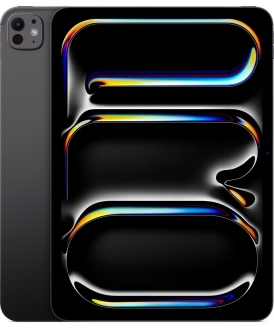
Released in October 2025, the iPad Pro M5 comes in 11-inch and 13-inch sizes with an Ultra Retina XDR Tandem OLED display and ProMotion adaptive refresh from 10Hz to 120Hz. That panel is still untouchable — stacking two OLED layers gives it brightness and contrast no rival has matched. Performance is almost absurd. Reports show the M5 iPad Pro matching the desktop M4 Max chip and every other PC chip in single-core performance, scoring 4,133 in Geekbench. For comparison, the MediaTek Dimensity 9400+ in the Galaxy Tab S11 Ultra managed 2,474. And that's exactly where the problem starts. All that power is boxed inside iPadOS. iPadOS 26 added background tasks that let you download and copy files in the background — something that frankly should have been there years ago. You're holding a chip faster than most laptops with software that still won't let you use it like one. Pros: - Ultra Retina XDR tandem OLED with 2,000,000:1 contrast and 1,600 nits peak HDR brightness - M5 chip is untouchable in the tablet category — genuinely desktop-class - 12GB RAM on base models, 16GB on 1TB and 2TB configurations - SSD speeds doubled; Wi-Fi 7 and Bluetooth 6 now standard - Just 5.1mm thick on the 13-inch model - Nano-texture matte glass option on 1TB and 2TB configs Cons: - After the June 2026 hike, the 11-inch starts at $1,199 and the 13-inch at $1,499 - Magic Keyboard and Apple Pencil sold separately — the real total exceeds a laptop - iPadOS still doesn't let the hardware breathe - No headphone jack, and the camera bump keeps it from lying flat without a case - No iPad Pro refresh planned for 2026; the next update is set for spring 2027 Best for: Creative professionals running Procreate, Affinity, or DaVinci Resolve. Video editors, illustrators, and designers where color accuracy is non-negotiable. If that's not you, this is money burned.

Announced in March 2026 and released on March 18, the iPad Air M4 is arguably the most balanced device Apple sells. Tech Advisor calls it not just the best iPad for most people, but the best tablet overall. The logic is simple: M4 is still ridiculously fast. Streaming, note-taking, photo editing, gaming — none of it needs M5. And the Air ships with 12GB of RAM, so multitasking never feels tight. At 465g for the 11-inch model, it's the kind of tablet you actually pick up. What you give up is display tech. The Air uses an LCD panel instead of OLED, and it's thicker and heavier than the Pro. Blacks aren't as deep and HDR content loses some punch — but you'd need both devices side by side to notice. Pros: - M4 handles essentially every 2026 workload without breaking a sweat - 12GB RAM as standard - The 11-inch weighs just 465g — comfortable for extended handheld use - Wi-Fi 7, Bluetooth 6, and 4K 60fps video recording - Available in both 11-inch and 13-inch sizes - iPadOS app ecosystem remains far ahead of Android tablets Cons: - Now starts at $749 after the June 2026 hike, up from $599 - No OLED — the display is a clear step down from the Pro - Thicker and heavier than the iPad Pro - Pencil and keyboard still cost extra - 128GB base storage feels stingy in 2026 Best for: Anyone already on iPhone and Mac who wants a tablet for content, notes, light creative work and multitasking. For students, this is the sensible iPad on this list.
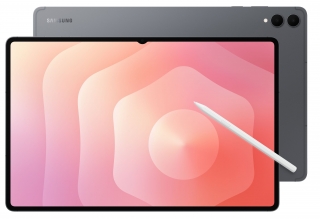
Android's flagship. It packs a 14.6-inch Dynamic AMOLED 2X panel, a 3nm MediaTek Dimensity 9400+ chipset, and an 11,600mAh battery with 45W charging. Given the iPad Pro M5 tops out at 13 inches, Samsung wins the screen-size battle outright — and the wider aspect ratio means far fewer black bars when watching video. The real differentiator is software: Samsung DeX. It turns the tablet into a proper desktop environment with resizable windows and true multitasking that iPadOS still can't match. Add the S Pen in the box, and Samsung's laptop-replacement pitch stops sounding like marketing. But is it worth the price? TechRadar's criticism is blunt — while the Dimensity 9400+ is a decent mobile processor and a meaningful upgrade over the Tab S10 Ultra, it doesn't come close to the M5's performance. MediaTek wins some graphics benchmarks but falls short on processing power compared to even the newest Snapdragon Samsung uses in its own phones. Pros: - 14.6-inch AMOLED — the biggest and most impressive tablet display available - 11,600mAh battery plus microSD expansion - S Pen included in the box - DeX received meaningful productivity-focused upgrades this generation - Geekbench 6 scores of 2,799 single-core and 9,105 multi-core - Android 16 in a 5.1mm chassis Cons: - At $1,200 it competes directly with Apple's largest iPad Pro — but not on performance - The display is extremely reflective and Samsung offers no matte alternative - The MediaTek choice is questionable; Snapdragon 8 Elite would have been faster - 692g makes one-handed use essentially impossible - The OnePlus Pad 3 costs half as much and isn't significantly smaller - Android tablet app optimization still trails iPadOS Best for: Note-takers, digital artists, and anyone genuinely trying to replace a laptop with a tablet. If you're already in Samsung's phone ecosystem, the integration is a real bonus.
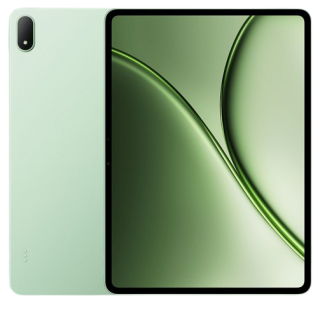
Launched on April 30, 2026, the OnePlus Pad 4 is the most interesting device on this list — because at roughly half the Galaxy Tab S11 Ultra's price, it beats it in several areas. The 3nm Snapdragon 8 Elite Gen 5 pushes past 4.1 million points on AnTuTu, a 42% jump over its predecessor. In Geekbench 6 it scores 3,467 single-core and 10,377 multi-core — meaning it outruns the $1,200 Samsung on both counts. Battery life is where it gets ridiculous. There's a 13,380mAh cell with 80W fast charging. One review measured 24 hours of continuous YouTube streaming and multiple days on moderate use, with a full 0-100% charge taking just under two hours. So why isn't it first? Because the compromises are real. The lack of Widevine L1 certification is a serious oversight for a display-centric device at this price, and the complete absence of a cellular option is hard to justify when cheaper 5G alternatives exist. Pros: - 13.2-inch 3.4K (3392x2400) display with adaptive 144Hz, 1,000 nits and Dolby Vision - Geekbench 6: 3,467 / 10,377 — fastest in its class - 13,380mAh battery, 80W charging, 672g at 5.94mm thick - A 45,260mm² vapor chamber keeps thermals in check under sustained load - Eight-speaker audio system and up to five simultaneous windows - The OnePlus Stylo Pro offers haptic feedback, similar to Apple Pencil Pro - Roughly $631 for 8GB/256GB and $684 for 12GB/512GB Cons: - No Widevine L1 certification — streaming services won't deliver full HD - No cellular option at all - No GPS and no microSD slot - IPS LCD rather than OLED - 13MP rear and 8MP front cameras are mediocre for the price - Android tablet apps remain poorly optimized Best for: Gamers, media watchers, and anyone who prioritizes battery life. If you want maximum Android performance for minimum spend and don't need cellular, this is the smartest buy here.
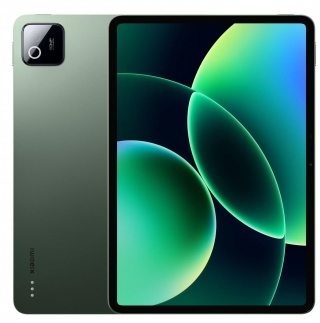
Xiaomi's play is transparent: near-flagship hardware at roughly half the price. Wi-Fi 7 is included, and Workstation mode lets you window and resize apps much like a traditional desktop, making multitasking genuinely easy. For tighter budgets there's the standard Pad 8. It runs a Snapdragon 8s Gen 4 and performs beautifully in everyday use — even demanding 3D titles run without issue. After a month of testing, an Android Central editor concluded it's the best mid-range Android tablet you can buy. Xiaomi isn't selling "the best." It's selling the cheapest version of "good enough" — and in 2026's pricing climate, that might be the most valuable thing a device can offer. Pros: - Snapdragon 8 Elite at this price point is essentially unmatched - 9,200mAh battery, comfortably larger than the iPad Air's 7,606mAh - Workstation mode delivers genuine desktop-style multitasking - Wi-Fi 7 support and premium metal construction - 485g — light for its class - The best price-to-performance ratio on this list Cons: - Base model ships with only 8GB RAM and 128GB storage - HyperOS carries bloatware and takes adjustment - Software support window is shorter than Apple's or Samsung's - Accessory ecosystem (pen, keyboard) is less mature - Official availability and warranty support vary by region Best for: Students on a budget, anyone wanting a second tablet, or people who want a media and smart-home device around the house. Also: anyone who wants the premium feel without a four-figure invoice.
The rules for buying a tablet changed in 2026. Apple's June price increases mean iPads are no longer the automatic answer, and Android's value devices have become genuinely defensible alternatives.
The short version: iPad Pro M5 for creative professionals, iPad Air M4 for most people, Galaxy Tab S11 Ultra for the biggest screen and real productivity, OnePlus Pad 4 for best value, and Xiaomi Pad 8 Pro for tight budgets.
One final piece of advice: if you're not in a hurry, wait. The memory shortage isn't expected to ease before late 2027, so prices won't drop soon — but if your current tablet still works, this may be the worst year in recent memory to upgrade.
Frequently asked questions
Which tablet is recommended for creative professionals in 2026?
For creative professionals, the Apple iPad Pro M5 is the recommended tablet. It offers advanced features suitable for demanding creative tasks and is designed to meet the needs of this user group.
What is the best tablet for users on a tight budget in 2026?
If you are on a tight budget, the Xiaomi Pad 8 Pro Tablet is the recommended option. It provides a more affordable alternative while still offering a good user experience for its price point.
Why have tablet prices increased significantly in 2026?
Tablet prices have risen due to a surge in memory prices, specifically DRAM and NAND capacity, driven by AI data centers. DRAM prices increased by approximately 98% in Q1 2026, with no significant relief expected until late 2027.
Is it advisable to purchase a new tablet in 2026 given the current market conditions?
If you are not in a hurry and your current tablet is still functional, it is advisable to wait before upgrading. The memory shortage is not expected to ease before late 2027, meaning prices are unlikely to drop soon, making 2026 potentially the worst year to upgrade.