
📅 August 17, 2026
The 8 Weirdest Phones of 2026: From Robotic Camera Arms to Built-In Fire Starters
The phone market has been producing the same glass rectangle for years. But 2026 delivered a handful of devices that broke the mold: a Honor with a motorized gimbal arm, an Oukitel that starts fires, a RedMagic with visible liquid cooling, and an actual phone designed for pets.
The phone industry has been boring for a while. Every year brings the same glass rectangle, a slightly better camera, a slightly bigger battery. The only real difference is the logo. That stagnation has become so obvious that manufacturers are now choosing weirdness as a differentiation strategy.
Which is exactly what made 2026 interesting. MWC Barcelona 2026 offered everything from a robot phone that nods at you to a model packing a built-in electric igniter. Some devices flirt with the absurd, others solve problems you didn't know you had — but all of them make you pause.
None of the eight phones below will top a "best of" list. Some will never go on sale, some will stay in China, and some require you to be a very specific kind of person. But each one asks the same question in a different way: what does a phone actually have to be?

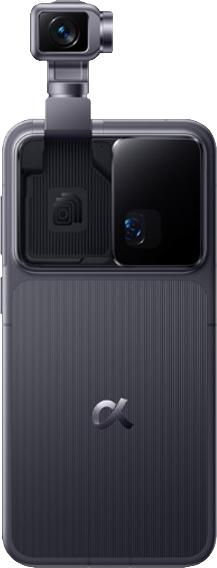
The most talked-about device of the year is probably also the strangest. Honor officially unveiled the Robot Phone in China, turning one of the year's most unusual smartphone concepts into a commercial flagship. The defining feature is the mechanical gimbal integrated into the rear camera system — Honor says the module required more than 60 manufacturing processes and incorporates over 100 precision components. Constructed from titanium, the 4-DoF gimbal weighs just 26 grams including the motor, with the arm providing physical stabilization and 360-degree rotation. What makes this more than a party trick is the software behind it. Through its ARRI partnership, the main camera supports 10-bit ARRI LogC3 recording, while ARRI Wide Gamut 3 and ARRI Looks give creators control over color and dynamic range. Honor claims the system delivers up to 14 stops of dynamic range, offering flexibility in tools like DaVinci Resolve. AI Live-Tracking can automatically pan and tilt the camera to keep you in frame, while FPV, Tilt Lock and AI SpinShot provide additional creative shooting modes. It's an Osmo Pocket that fits in your pocket, essentially. Is it actually buyable? The 12GB/512GB trim is priced at CNY 9,999 (about $1,482), while the 16GB/1TB model goes for CNY 12,999 (roughly $1,927). Pre-orders opened on August 12, with official sales beginning August 18, 2026. The rest of the hardware doesn't compromise either: a 6.3-inch LTPO OLED with 6,800 nits peak brightness, Snapdragon 8 Elite Gen 5, a 7,060mAh silicon-carbon battery and 120W wired charging. The open questions are long-term durability of moving parts and a modest IP54 rating. Why it's here: Because "my phone can nod at me" is still an absurd sentence in 2026.

It sounds like a joke. It isn't. Oukitel's WP63 is a ruggedized smartphone meant to set things alight. It has a built-in electric igniter aimed at emergency response and camping, helping start fires when you forgot matches. The heating coil is similar to cigarette lighters in cars circa 1987, hidden behind a protective cover at the top of the device, and activated through an app once it pops out. An Oukitel spokesperson lit some rolled-up paper during a demo, and the process was surprisingly gentle and controlled. But the fire isn't really the point — the philosophy is. A 20,000mAh battery dominates the design and pushes the device to 27mm thick. A built-in USB-C cable extends from the body to deliver 18W reverse charging to other gear. Add IP69 and MIL-STD-810H ratings, a built-in camping light and an emergency loudspeaker. This phone isn't for everyone, and it isn't trying to be. It's priced at $399 and completely ignores the tendency toward thinner and thinner phones. The specs lean utilitarian: a Unisoc T8200 processor and a 6.7-inch 720p display running at 120Hz. In daily use it promises nothing. But on a mountain, in a forest, somewhere without a power outlet — it suddenly makes a lot of sense. Android Authority described it as feeling "like a weapon in the hand," while noting it remains a fully functioning Android 16 phone. Why it's here: Carrying fire in your pocket is both alarming and strangely persuasive.

vivo's 2026 move physically stretches the definition of "camera phone." Revealed at MWC Barcelona 2026, the X300 Ultra works with a professional camera rig and a Zeiss telephoto zoom attachment. The claimed industry-leading 400mm-equivalent vivo Zeiss Telephoto Extender Gen 2 Ultra is the centerpiece of the new professional photography kit, and it's twice as long as the Zeiss extender released for the X200 Ultra last year. The numbers are hard to process. The 400mm Zeiss teleconverter delivers up to 17x in-sensor optical zoom and supports 30x lossless digital zoom at an 800mm focal distance. For context, both the X300 and X300 Pro use a 200mm Zeiss teleconverter with 2.35x optical zoom. The phone itself is no slouch: a 6.82-inch 2K LTPO OLED, Snapdragon 8 Elite Gen 5, up to 16GB of RAM and a 7,000mAh battery. It also supports 4K 120fps 10-bit Log recording across all focal lengths. But a question lingers: is this still a phone? Paired with a SmallRig-built camera cage complete with grip controls, cooling fan and accessory mounts, the device starts to look less like a smartphone and more like a modular camera rig that happens to run Android. TechRadar asks the question directly — is it revolutionary, or just a gimmick? The answer is probably somewhere between. Why it's here: The lens you attach to the phone is longer than the phone.

Gaming phones have always been excessive, but RedMagic did something genuinely new this year. The RedMagic 11 Pro is the first mass-produced phone with liquid cooling. The system, called AquaCore, is built into the design — on the Nightfreeze and Subzero transparent finishes you can watch the cooling work through the back. Coolant flows through a visible channel, hidden beneath the rear panel on the matte black variant. The thermal architecture alone is an engineering flex. RedMagic says its 13,116mm² vapor chamber is the largest in the world, joined by a liquid metal layer, active liquid cooling and a 24,000 RPM fan. While competitors have been content with passive cooling, RedMagic built an entire liquid circulation system into a smartphone — thermal management overkill in the best possible way. Despite the fan, the device carries an IPX8 waterproof rating, which is remarkable on its own. Does it work? The numbers back the claim. RedMagic says the phone beats the iPhone 17 Pro Max in a head-to-head gaming test with higher average fps (60.9 vs 59.6), far better frame rate variance (0.5fps vs 6.5fps), and substantially lower battery drain while gaming (27% vs 49%). A 7,500mAh battery, 520Hz shoulder triggers, up to 24GB of RAM and 1TB of storage round out the package, at $749 — less than most flagships. Why it's here: Watching liquid move inside your phone is something nobody needed and everybody wants.

The modular phone idea died years ago with Google's Project Ara. Tecno resurrected it this year and produced one of MWC's most-discussed concepts. Tecno combined a popular trend from the past — modular phones — with a trend that's popular now — ultra-slim phones — to create the Tecno Modular Phone. Built on Modular Magnetic Interconnection Technology, it was shown as a platform for future innovation. The core idea: current smartphones lock you into a particular set of hardware features, and to get new hardware you have to replace the whole phone. In practice it feels like the logical extension of MagSafe. Ultra-thin magnetic modules attach to the back, including a 4.5mm battery pack, an action camera and even a standalone telephoto lens. Seeing it in person, it felt like a true Swiss-army-knife phone — a device that transforms depending on the situation. Tecno showed two versions at its stand: one with four magnets and one with two, with a whole range of magnetic accessories from power banks and cameras to microphones with wind protection. That's exactly where the trouble starts. This device has no launch plan. The history of modular phones is a history of good ideas dissolving under economic reality: building an accessory ecosystem is expensive, users don't buy modules, the manufacturer pulls support, and you're left holding an abandoned platform. The standard caveat for MWC 2026 applies here too — many of the most exciting devices are concepts that may never reach consumers. Still, the idea puts a question back on the industry's table. Why it's here: Nobody can quite let go of the dream of upgrading one piece at a time.

Some weirdness looks backward rather than forward. Shanghai-based Unihertz has been making BlackBerry-style handsets with full physical keyboards for typing fanatics for years. The new Titan 2 Elite brings a fresh design and updated internals. Pairing a modern spec sheet with an obsolete form factor makes it more than a nostalgia object. The Titan 2 Elite offers a 120Hz AMOLED display, a Dimensity 7400 5G chipset, 12GB of RAM, 256GB of storage, dual 50MP cameras, eSIM support and Android 16 with five years of update support. The beefier Titan 2 Elite Pro steps up to a Dimensity 8400 5G with 12GB of RAM and 512GB of storage, while retaining near-extinct features like an infrared port and a programmable key. The strangeness here isn't technical — it's philosophical. The Titan 2 Elite pairs a QWERTY keyboard with Android 16 and four major OS updates, plus security support through 2031. That's a genuine answer for people who want an old-school phone without giving up their apps. What stands out is that this isn't a concept — it's a product you can actually buy. The screen is small, the body is thick and one-handed use is awkward, but for someone who writes emails, those trade-offs add up. Why it's here: A physical keyboard existing in 2026 is a small act of rebellion.
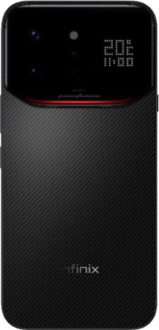
The most "normal" phone on this list has the least expected partnership behind it. Infinix unveiled the Note 60 Ultra at MWC 2026, co-developed with Italian automotive and design legend Pininfarina. It uses an aluminum unibody with a uni-chassis camera module protected by a single sheet of Gorilla Victus. That glass also covers a dot-matrix display and a floating taillight indicator that lights up on power-on or when a notification arrives. Pininfarina is best known for its work with Ferrari, and the car-like design ethos is immediately visible in the large pane of glass covering the camera bumps. The hardware is more serious than expected: a 4nm MediaTek Dimensity 8400 Ultimate paired with 12GB of RAM and 256GB of storage, a 3D IceCore vapor chamber for gaming, a 200MP primary camera, a 50MP telephoto with 3.5x optical and 100x digital zoom, and a 112° ultrawide. It's also the first phone in its category to offer two-way satellite messaging and calling. The weirdness is in how it all combines. Early reviews highlight the 7,000mAh battery, 144Hz AMOLED display and unusual extras like the glyph-style matrix, contributing to an aggregate 90% rating; criticism centers on the heavy 220g body and glossy screen reflections. You can raise a digital pet on the dot-matrix display embedded in the camera bump — the kind of idea that would never survive a flagship manufacturer's review process. Why it's here: A Ferrari designer's phone with a Tamagotchi on the back could only happen in 2026.

And the list ends somewhere nobody expected. At Mobile World Congress, GlocalMe presented the PetPhone, a connected device that attaches to a collar and lets pets communicate with their owners. Petpogo's Pet Phone attaches to your pet's collar and offers a two-way phone function. It's easy to find the idea ridiculous — picturing a cat placing a call is a stretch. But that's not where the product's logic sits. A device that can be located and can carry the owner's voice touches a real anxiety. A lost pet is among the most distressing scenarios an owner faces, and existing GPS collars are mostly one-directional: you can see where the animal is, but you can't reach it. Two-way audio, in theory, closes that gap. In practice the questions pile up fast. Battery life, collar weight, whether the animal tolerates it at all, coverage, and monthly data costs — none of that is settled yet. Even so, the PetPhone was among MWC's most-photographed products, and that's no accident: even displayed alongside devices like the Oukitel WP63, it held its own on the weirdness scale. This is what an industry hunting for new categories looks like. Why it's here: When the smartphone market saturates, manufacturers start looking for new customers — this time the four-legged kind.
CONCLUSION: Why This Weirdness Matters
Most of these devices won't be commercial successes. Tecno's modular concept probably won't ship, the PetPhone will stay a niche product, and the Robot Phone likely never leaves China.
That's not the point. The smartphone market has plateaued with very similar, safe designs. Manufacturers are creating boundary-pushing hardware to capture attention, differentiate from Apple and Samsung, and test new functional paradigms. Some of these experiments will fail — but some will be standard features in five years. Foldables were once on lists exactly like this one.
That said, let's be honest: moving parts like rotating rings and robotic arms introduce serious durability concerns, and highly experimental features often come with a massive price premium. Think twice before buying any of them. But the industry needed this energy. If you're tired of buying the same rectangle every year, 2026 at least gave you something to smile at.
Frequently asked questions
What makes the phones from 2026 stand out compared to previous years?
The phones from 2026 are notable for their unique and often unusual features, moving away from the typical glass rectangle design. Manufacturers are using 'weirdness' as a differentiation strategy, introducing devices like a robot phone or one with a built-in electric igniter.
Are these experimental phones from 2026 expected to be widely available or commercially successful?
Most of these devices are not expected to be commercial successes, with some likely never going on sale, staying in specific regions like China, or remaining niche products. Their purpose is more about pushing boundaries and testing new functional paradigms rather than achieving mass market appeal.
What are some potential drawbacks or concerns associated with these innovative 2026 phone designs?
Moving parts, such as robotic arms and rotating rings, introduce serious durability concerns for these innovative phone designs. Additionally, highly experimental features often come with a massive price premium, which is something to consider before purchasing.
Why are manufacturers exploring such unconventional phone designs in 2026?
Manufacturers are exploring unconventional designs to capture attention and differentiate themselves from established brands like Apple and Samsung. This strategy aims to test new functional paradigms and inject energy into a smartphone market that has plateaued with very similar, safe designs.